By occasion
Rosaries for the rose Sundays
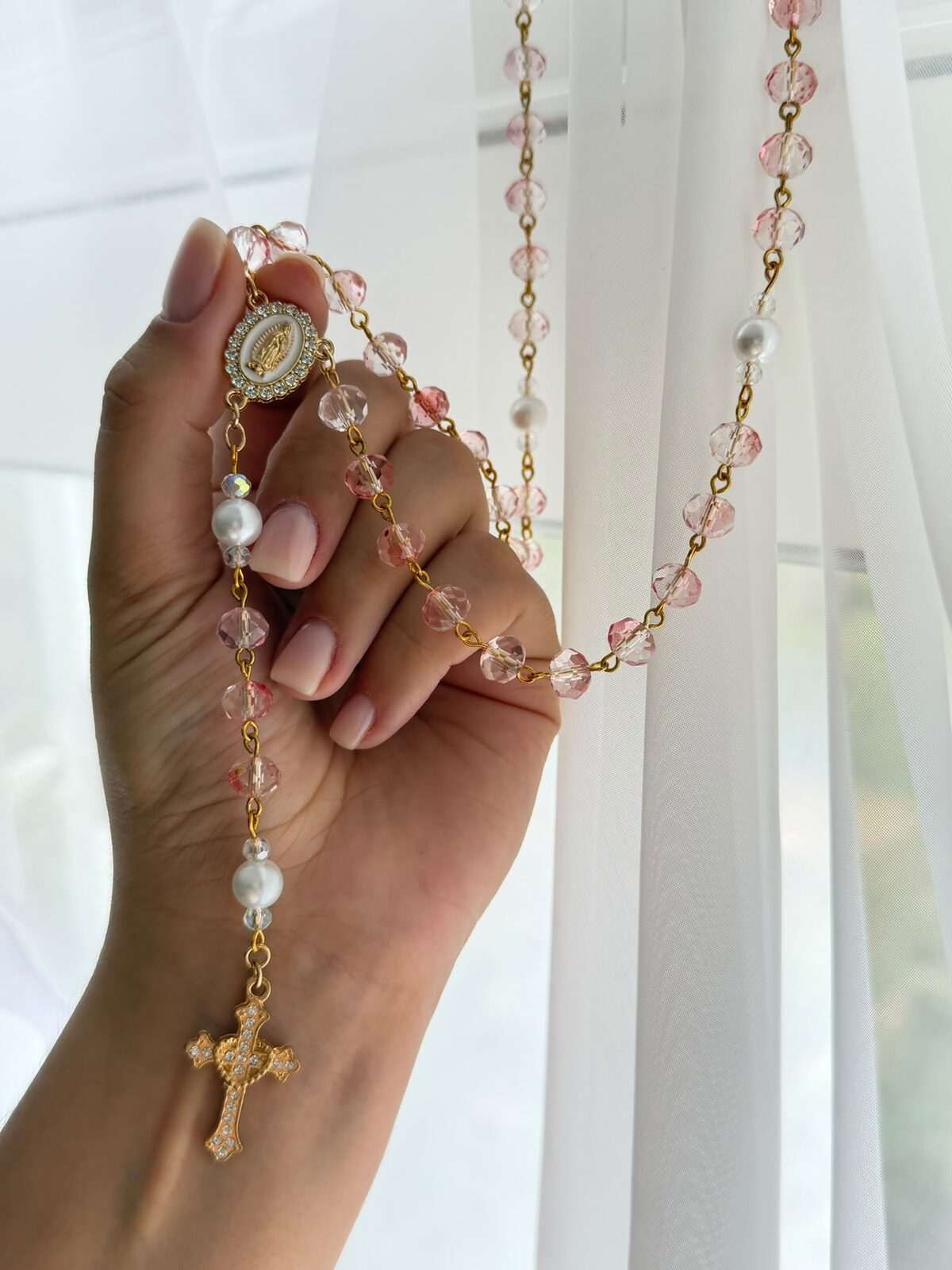
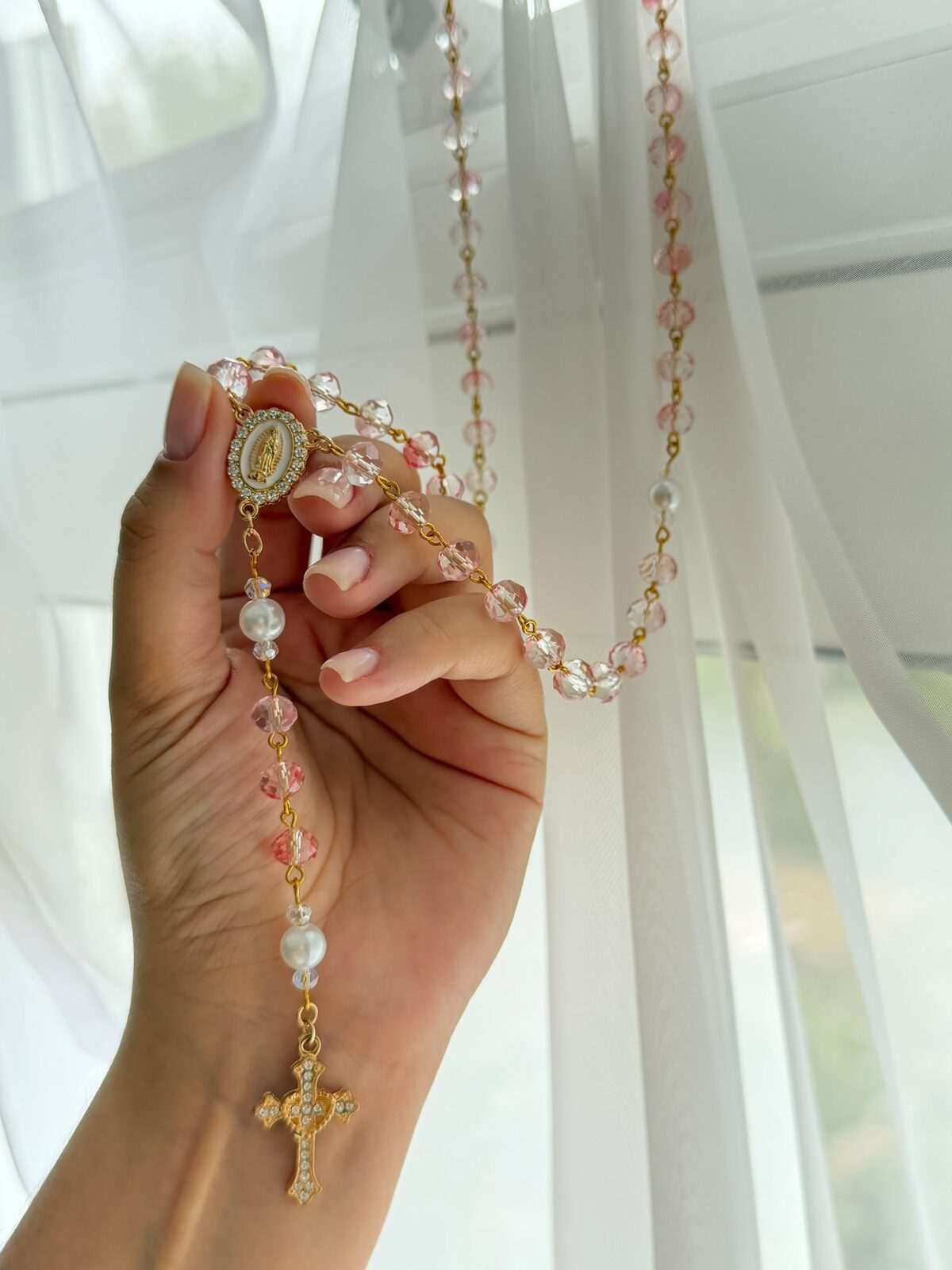
Hand-wired rosaries in rose — the colour the church allows itself on Gaudete and Laetare, the two Sundays in the year when the violet is set aside.
Rose is the rarest colour in the calendar. It appears twice a year and nowhere else: on Gaudete Sunday, the third of Advent, and on Laetare Sunday, the fourth of Lent. On both, the violet of a waiting season is set aside for a single day and the church allows itself to be glad early. The names are the first words of each day’s introit — Gaudete, rejoice; Laetare, be glad.
It is a small permission and it is meant to be. That is worth saying, because rose reads to an outsider as the prettiest colour here and it is in fact the most disciplined one: it exists to interrupt a fast, not to decorate a feast.
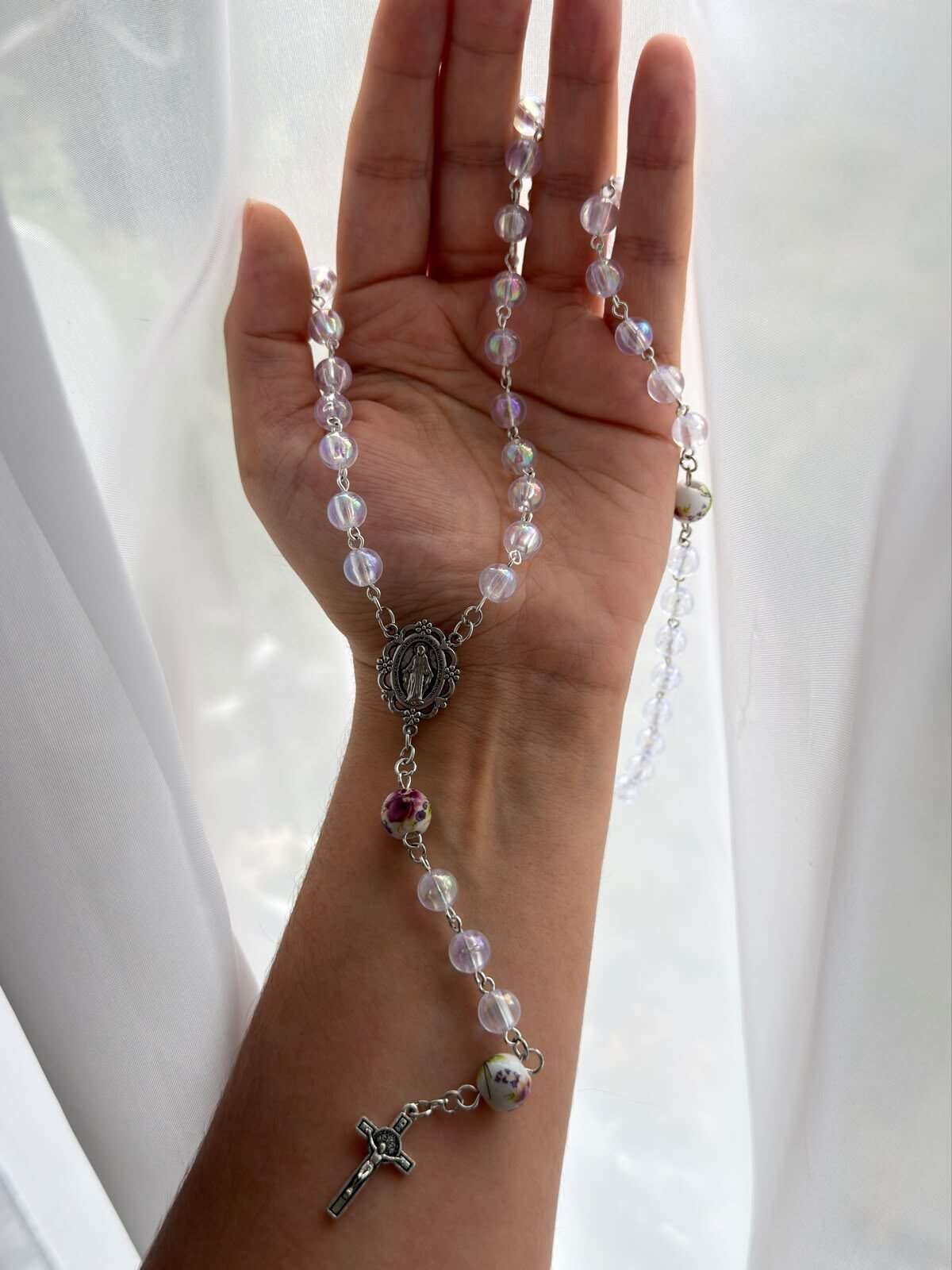
Getting it right is the hardest thing on the bench. A shade too warm and it is pink; a shade too cool and it is violet again, which defeats the entire point of the day. The two pieces here take it differently. One alternates pale pink with near-clear the whole way round, with a round pale note marking every decade, and is named for Gaudete itself. The other shifts through pale rainbow and carries, at the turns, small beads painted with roses — so the name is on the piece as well as in it, and a thumb finds them without looking.
If you are buying for somebody who already has a white piece and a green one, this is the interesting third. It is also the one people buy for themselves after a long Lent.
Every one is wire-linked: fifty-nine beads and more, each turned onto its own link and closed by hand at one bench in Contenças, over the better part of a day. Made once, and not made again.